Friday, 15 April 2016

Thursday, 14 April 2016
Saturday, 27 February 2016
Thursday, 25 February 2016
Wednesday, 17 February 2016
Evaluation: Question 3) What have you learnt from your audience feedback?
Our target audience...


How did this help you make decisions?


Soundcloud Feedback:
Link to Youtube and feedback:
The feedback i received from the audience suggested that I did create a music video that was both conventional and successful. This is due to the amount of positive comments we received and the number of likes on YouTube. Even though as a group we did receive some negative feedback our product still followed generic conventions proving that it was successful.
Genre: Hip-Hop/ Rap because the song we have chosen is by Rap artist J.Cole
Age: We are targeting at ages 16-30 because of mature themes involved
Gender: Suitable for both genders
Ethnicity: Minorities
Occupation: C2-E
Hobbies: The audience we are targeting at are not expected to enjoy or be a part of any specific hobbies or activities but they may aspire to live a lavish lifestyle along with already being sociable.
Questionnaire and Graphs:
When going through the initial planning of my music video, I carried out a questionnaire in order to gather specific information that will help me produce a successful end product. I say this because doing this questionnaire allowed me to discover who my target audience was and highlight specific elements of the genre I chose to portray. After collecting value information from the questions I had asked, I created graphs which outlined popular opinions and allowed me to decide on what to involve within my music video. From asking questions linked specifically to the hip-hop/ rap genre it allowed me to envision on the themes and elements of the genre that my target audience would be looking out for.
My Questionnaire and Graphs:


How did this help you make decisions?
This helped me make decisions because it outlined what my target audience was expecting. Also it showed me what my target audience like and dislike about the portrayal of the genre and what themes they would like to see involved. Without all the information I had gathered from handing out a questionnaire and receiving feedback it would've of been incredibly difficult to create an finished product that was successful. The question also allowed me to identify my target audience and define any other demographics vital to the making of my music video. Asking certain question allowed me to speed up the planning process as it helped me make decisions at a quicker pace, for example, the question; "What type of costume should the artist be wearing?" allowed me to decide on what my artist's image would be and how i would make it fit to please the audience.
The importance of receiving critical feedback once the product has been made?
After the product was made showing it to the target audience was important, in order to gain final feedback. Doing this and taking in final feedback allowed the product to be altered and critiqued one more time before being finalised and published. We held a focus group which was made up of AS film and media students along with A2 media students. Displaying our work to this group of people along with people who take interest in the genre allowed them to give us feedback and fix and mistake before publishing our product.
Pictures of the focus group:


Soundcloud Feedback:
Link to Youtube and feedback:
Why did you put your work on YouTube?
Putting the product on YouTube means it is available internationally, for everyone and at all times. With it being such a large platform, this means that there will be more room for extra feedback on the product and we can assess on the successfulness of it through the amount of views we receive.
Positive Comments:
"This is so amazing"
"Love the editing techniques"
From these comments it was evident that audience enjoyed the product i have created and that it was successful. It also proves that they enjoyed the editing techniques i used and that everything fit into the conventions of the genre i was representing.
Negative Comments:
"Narrative could have been portrayed a little clearer."
"Performance was inconsistent, at times it was really good but other times it was poor."
From this feedback it told me that my audience would appreciate if the performance was more consistent throughout the video however this downfall did not alter the success of my music video.
What did you learn from this audience feedback in terms of whether you created a successful and conventional music video?
The feedback i received from the audience suggested that I did create a music video that was both conventional and successful. This is due to the amount of positive comments we received and the number of likes on YouTube. Even though as a group we did receive some negative feedback our product still followed generic conventions proving that it was successful.
Facebook and Instagram...
Positive feedback:
"The projector scenes look great! well done!"
"Really enjoyed the narrative"
From this feedback I gathered that my target audience took a liking to the projector idea we included within our music video and that the narrative contrasting to these scenes worked and they enjoyed it.
Negative feedback:
"Narrative could have been portrayed a little clearer"
"Performance was inconsistent, at times really good, at time poor"
This feedback shows that the audience didn't understand the narrative of the video as clear as I wish they would have. Also the inconsistency of the performance was another downfall but i still have produced a successful music video.
What did you learn from this audience feedback in terms of whether you created a conventional and successful music video?
Using various media platforms to broadcast my work was essential because it allowed me to gather as much feedback as possible, whether it was positive or negative. Doing this allowed me to finally determine whether my music video was conventional and successful. Overall I have gained positive feedback on my music video but there is still room for improvements in certain areas. Audience feedback enabled me to realise what my target audience prefers and what they expect to see. All the feedback i had gained was beneficial throughout the process of creating all of my products and has even ensured me that if i was to make the music video again i would work on all negative feedback given to make it better.


Friday, 5 February 2016
Research and planning – advert: Drafts of adverts
Drafts for our advert enable us to experiment with the best possible ways in which we can attract our audience in the most successful way. It will help us communicate with the consumers of the product and give them key information that may come across important to them. When creating drafts we experimented with what would be the most effective, we also gain feedback on all drafts to help us improve our ideas.
This is our first draft...

Our Feedback...
Postive:

This is our first draft...

Our Feedback...
Postive:
- Clear information on the album availability etc.
- Consistency in theme colours etc with digipak.
- Ratio and the framing of the picture is perfectly executed.
Negative:
- Make it easier to recognise who the artist is in the picture.
- Better typography needs to be included and white bits around logos need to be removed.
- Make the artist stand out more
This is our second draft...

Our feedback...
Positive:
Negative:
Research and planning – Digipak: Drafts of digipak
Creating a draft for our digipak is essential because it enables us to gather information on what will be most effective for our audience to engage with. It also allows us to experiment with something that is a large part of our campaign and to see how adjusting certain elements of a digipak will effect our target audiences reaction to the product.
Draft 1...

Positive Feedback...
The feedback we gained from it...
Negative:
Positive:
Draft 1...

Positive Feedback...
- Images are good
- Clear theme
- Consistency in overall style
What to improve?
- Try and arrange faces a little better
- Typography on the back
- Information missing
- Artist name bigger
After gaining feedback on our first draft, I think it is evident that there are changes that need to be made. We will be creating a second draft which includes similar ideas and themes along with the improvements that need to be made.
This is our second draft...

This is our second draft...

Negative:
Positive:
Friday, 8 January 2016
Research and planning – advert: Identifying conventions and analysing existing adverts
Purpose:
The purpose of an advert is to show key information and release dates. It also is a platform of promotion for the artist's album. An advert excites the audience and allows the to engage with the artist so that they are not forgotten about. If an advert campaign is successful it can build a strong bond between an artist and their fan base.
Generic Conventions:
In a advert you will most likely see...
In a advert you will most likely see...
- Album title
- Artist name
- Release date
- Artist image
- Release date
- Where to buy
- Explicit label
I analysed an existing advert similar to the one I wish to create:


Katie has also done a second analysis of an advert...
Research and planning – Digipak: Identifying conventions and analysing existing digipaks
Purpose:
- Includes key information
- Promotion of album for artist
- Gets the audience engaged again with the artist, not forgotten about etc.
Generic Conventions:
- Album title
- Artist name
- Release date
- Artist image
- Release date
- Explicit label
I analysed an existing digipak similar to the one I wish to create:

Katie also analysed a similar digipak...

Katie also analysed a similar digipak...
Thursday, 7 January 2016
Research: Subcultures.
Subcultures are groups of people that come together through mutual interests, values and beliefs. They also see themselves to be placed outside and away from mainstream culture. For example 'skin heads' are seen as a subculture because they all share similar traits and are bald. Skinheads are known to be white males who are middle aged. They also all dress similarly in leather and studs and come across arrogant and violent. 'Hippies' are also seen as a subculture due to the luminous colours they wear and the fact that they believe in being peaceful protesters. Hippies are commonly from any ethnicity.
Subcultures do not like the idea of conformity and rebel against it, along with common values and systems. All subcultures have their own beliefs and values about how they should live their lives and do not follow capitalism. They are not known to be consumerists because they consume a beneficial lifestyle, that is relevant to them. It is abnormal for one subculture to mix with another subculture because they all have various ideologies on how an individual should live their lives and these usually clash with one another because they do not like the other race or certain groups of people.
It is evident that subcultures are evident in the music industry. All subcultures conform to different genres of music. For example:
Appealing to subcultures through the mainstream...

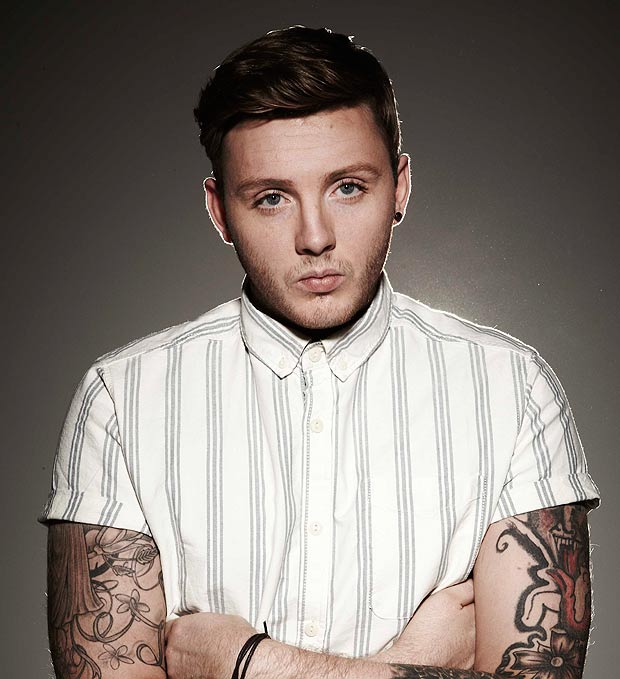 X-factor is an example of a show that is used into today's industry to fill the gaps within the music industry. Shows like this give the audience the opportunity to see an ordinary person evolve into a star. They also start to feel a connection with these new 'stars' because during the process of the competition they are able to vote and forward their opinions which help mould these stars into who they finally become. For example someone like James Arthur who won the x-factor was quite a subcultured individual within himself, this shows that within society sub-cultures do exist and that there is a gap in the market for them.
Relation to Hebdige...
 Nirvana...
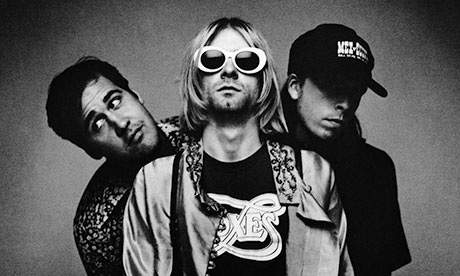
A band like Nirvana is such a big commodity within society. You are able to buy into their lifestyle which makes their fan base feel closer to them and also leads to imitation of their behavior. For example their loyal fans dress like them and share interests with their interests. This is an example of a sub-culture audience contradicting to the idea of conforming to the mainstream lifestyle.
Conclusion...
Subcultures do not like the idea of conformity and rebel against it, along with common values and systems. All subcultures have their own beliefs and values about how they should live their lives and do not follow capitalism. They are not known to be consumerists because they consume a beneficial lifestyle, that is relevant to them. It is abnormal for one subculture to mix with another subculture because they all have various ideologies on how an individual should live their lives and these usually clash with one another because they do not like the other race or certain groups of people.
It is evident that subcultures are evident in the music industry. All subcultures conform to different genres of music. For example:
- Queers listen to Pop, dance and electro music
- Bikers listen to Rock and heavy metal
- Punks listen to Rock , indie and heavy metal
- Skinheads listen to Reggae and scar music
- Hipsters listen to Indie
McCraken:
McCraken argues that the world is full of diversity, dynamism and creativity. He believes that if we look at the different variety of ideologies and values and how they work, then we can't say that subcultures come from just one culture but they come from many different ones.
Someone's view that contrasts with McCraken is Hebdige...
Hebdige's argument is that although people state that all subcultures are different, deep down, they are all the same. He says that they are 'little cultures' that are all doing the same thing, just in different ways. They all do the same thing of assistance and consumption and this is an active process. This suggests that different audiences share into the same cultural product. Subcultures all protest and resist being similar to the 'mainstream' masses, so therefore this makes them the same. However Hebdige still believes that individuals can contrast from mainstream groups and become a subculture.
Post-war there was social cohesion which came along with subcultures and the music associated with them. This was around the 50's and 60's. In the era of the 'swinging 60's' consuming music became an active process. Around this time it became apparent that everyone reads into music differently due to their cultural backgrounds and that we should not assume that all people in the 'mass culture' are the same.
Appealing to subcultures through the mainstream...
X-factor is an example of a show that is used into today's industry to fill the gaps within the music industry. Shows like this give the audience the opportunity to see an ordinary person evolve into a star. They also start to feel a connection with these new 'stars' because during the process of the competition they are able to vote and forward their opinions which help mould these stars into who they finally become. For example someone like James Arthur who won the x-factor was quite a subcultured individual within himself, this shows that within society sub-cultures do exist and that there is a gap in the market for them.Relation to Hebdige...
He states that the way each person consumes music varies from person to person and that no one consumes it in the same way. Also that different social and cultural backgrounds will lead to people interpreting things differently even if they are listening to the same song. This links in with the argument that people are not part of a 'mass' audience because they don't all like the same thing for different reasons.
Relation to Dyer...
Dyer states that all stars represent to us the same cultural values and attitudes and they will always promote a certain ideology to their audience. He believes that fans will also believe these same values and begin to imitate stars in order to feel closer and to fill aspirations of living that 'glamorous' lifestyle these stars tend to have. This can happen by the individual dressing like the star or adopting the same kind of behaviour.
Nirvana...A band like Nirvana is such a big commodity within society. You are able to buy into their lifestyle which makes their fan base feel closer to them and also leads to imitation of their behavior. For example their loyal fans dress like them and share interests with their interests. This is an example of a sub-culture audience contradicting to the idea of conforming to the mainstream lifestyle.
Conclusion...
After studying subcultures, I have learnt overall that the type of audience I would like to reach out to varies and that people will never interpret things the same way I do. My music video will be targeted at 16-25 year olds, that are interested in the hip-hop/ r&b genre because it is most likely that they will be the most interested in the genre we have picked. I do not think it would be a good idea for me to aim for one subculture audience because that is minimising the possible amount of success my music video could have.
Research and planning – advert: Advert information
Today's task was to plan our advert. We spent time planning what information we felt was vital and most suitable to involve within our advert. It's important that these decisions are made so that our advert is as successful as possible and appeals to our target audience.
What information will you include in your advert?
What information will you include in your advert?
- Name of artist: Lamarr Carter
We have decided as a pair to use the artist's real name because we do not want him to have any kind of alter ego. Also we would like him to be represented as quite humble and vulnerable within his music. Using his real name helps the target audience to see his true personality and represents that he is being very open within his music and has nothing to hide, this will help create a stronger bond and connection between him and his fans.
- Album Name: Tribulations
The album will present his story of how he got to where he is and show the audience that it wasn't easy and was a struggle. The songs in the album will hold the story of the up's and downs within his life and show themes of love, pain and triumph. This will also help build a strong bond between him and his fans.
- Debut Date: 5th of February 2016
We decided to release the album on this date because it is when we believed it to be the most suitable timing. Picking this date leaves us a month before the release of the whole album. Doing this will allow us to build up tension and excitement for the release of the artist's music, hopefully encouraging more people to engage within our campaign.
- Key Singles: No Role Modelz, Loose Ends and Bad For you
- Explicit/Parental Advisory:
The album we are releasing will withhold explicit language and sexual content. This will not be suitable for younger audiences who may be under 18 and want engage with the product. However there will also be the opportunity for the younger audiences to purchase clean versions of all music created.
- Record Label: SONY MUSIC.
- Available streaming and downloads - iTunes, Spotify, Tidal.
Wednesday, 6 January 2016


Planning: Editing.
Editing.
Kaleidoscope
editing.
Using
kaleidoscope editing will allow us to give our music video an abstract side to
it. By placing more than one frame of the same footage, it will capture the
audiences attention, making them want to see even more. This edit will also be
beneficial to us because it will allow us to create suspense and confusion
within the narrative of our music video which is much needed in order for it to
be successful. This type of edit is unique which will add an element of
excitement to our music video.
Slow
motion.
Slow motion
editing will be used within our music video to emphasize key parts of our
narrative that we would like to stand out for our target audience. Making these
key elements from the narrative stand out using the slow motion edits will
allow the audience to grasp a better understanding of the narrative we have
created and the type of message we are trying to put across.
Projection.
When
thinking about creating our product we decided to bring two worlds into one by
using the idea of projection. As we display our artist’s star image we will run
a projection of extra footage of them lip syncing as the narrative
Subscribe to:
Comments (Atom)