Subcultures do not like the idea of conformity and rebel against it, along with common values and systems. All subcultures have their own beliefs and values about how they should live their lives and do not follow capitalism. They are not known to be consumerists because they consume a beneficial lifestyle, that is relevant to them. It is abnormal for one subculture to mix with another subculture because they all have various ideologies on how an individual should live their lives and these usually clash with one another because they do not like the other race or certain groups of people.
It is evident that subcultures are evident in the music industry. All subcultures conform to different genres of music. For example:
- Queers listen to Pop, dance and electro music
- Bikers listen to Rock and heavy metal
- Punks listen to Rock , indie and heavy metal
- Skinheads listen to Reggae and scar music
- Hipsters listen to Indie
McCraken:
McCraken argues that the world is full of diversity, dynamism and creativity. He believes that if we look at the different variety of ideologies and values and how they work, then we can't say that subcultures come from just one culture but they come from many different ones.
Someone's view that contrasts with McCraken is Hebdige...
Hebdige's argument is that although people state that all subcultures are different, deep down, they are all the same. He says that they are 'little cultures' that are all doing the same thing, just in different ways. They all do the same thing of assistance and consumption and this is an active process. This suggests that different audiences share into the same cultural product. Subcultures all protest and resist being similar to the 'mainstream' masses, so therefore this makes them the same. However Hebdige still believes that individuals can contrast from mainstream groups and become a subculture.
Post-war there was social cohesion which came along with subcultures and the music associated with them. This was around the 50's and 60's. In the era of the 'swinging 60's' consuming music became an active process. Around this time it became apparent that everyone reads into music differently due to their cultural backgrounds and that we should not assume that all people in the 'mass culture' are the same.
Appealing to subcultures through the mainstream...

 X-factor is an example of a show that is used into today's industry to fill the gaps within the music industry. Shows like this give the audience the opportunity to see an ordinary person evolve into a star. They also start to feel a connection with these new 'stars' because during the process of the competition they are able to vote and forward their opinions which help mould these stars into who they finally become. For example someone like James Arthur who won the x-factor was quite a subcultured individual within himself, this shows that within society sub-cultures do exist and that there is a gap in the market for them.
Relation to Hebdige...
He states that the way each person consumes music varies from person to person and that no one consumes it in the same way. Also that different social and cultural backgrounds will lead to people interpreting things differently even if they are listening to the same song. This links in with the argument that people are not part of a 'mass' audience because they don't all like the same thing for different reasons.
Relation to Dyer...
Dyer states that all stars represent to us the same cultural values and attitudes and they will always promote a certain ideology to their audience. He believes that fans will also believe these same values and begin to imitate stars in order to feel closer and to fill aspirations of living that 'glamorous' lifestyle these stars tend to have. This can happen by the individual dressing like the star or adopting the same kind of behaviour.
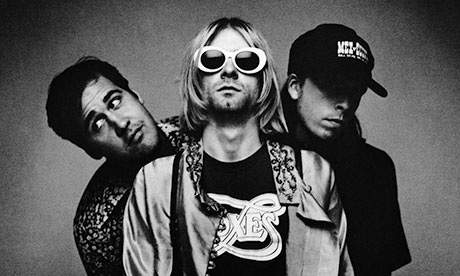
 Nirvana...
A band like Nirvana is such a big commodity within society. You are able to buy into their lifestyle which makes their fan base feel closer to them and also leads to imitation of their behavior. For example their loyal fans dress like them and share interests with their interests. This is an example of a sub-culture audience contradicting to the idea of conforming to the mainstream lifestyle.
Conclusion...
After studying subcultures, I have learnt overall that the type of audience I would like to reach out to varies and that people will never interpret things the same way I do. My music video will be targeted at 16-25 year olds, that are interested in the hip-hop/ r&b genre because it is most likely that they will be the most interested in the genre we have picked. I do not think it would be a good idea for me to aim for one subculture audience because that is minimising the possible amount of success my music video could have.

Excellent research into what sub-cultures are and the thoughts of Dyer and Macracken. Good examples drawn upon.
ReplyDelete